

Why Does My Knee Cap Ache?
June is here and school is out, let the summer fun begin! This time of year, I usually dial up my activity level because my kids are out of school. That means more time in the pool, running around the yard, and taking time to gently exercise my knee joint. I know I have a little something planned for myself as well, always full of content as I’m picking back up with my daily runs around Lady Bird Lake, while staying mindful of my osteoarthritis and potential tendinitis symptoms!
You’re probably doing the same thing, getting more active as the temperatures climb. Maybe you like to run or walk or play sand volleyball or ride your bike or *insert your favorite activity here*…but something is slowing you down. It could be your knee joint, with its complex network of ligaments, tendons, and bones, all susceptible to inflammation and soreness.
At first, things were great! Your ligaments and tendons were cooperating, you were running like never before, the cartilage in your knee joint providing ample cushion… walking further… you were just so happy and energetic!
But now, you find yourself turning down your friends and family. Declining invitations because of throbbing knee joint pain, maybe even suspecting osteoarthritis or a tendinitis flare-up. You don’t want to join them because your knee is causing a great deal of discomfort. Out of nowhere, your knee seems to have decided it wants to go back to winter time where you snuggled on your couch, avoiding the cold, instead of being outside and active in the great outdoors.
The problem is that you really don’t want to spend this summer on the couch. You want to go to the lake with friends. You want to chase your kids around the yard. You want to go on summer evening strolls with your significant other. You want to play a round of golf with your colleagues.
Understandably, you’re wary about the exacerbation of osteoarthritis symptoms causing more swelling and damage to your knee joint, or even the hurt caused by tendinitis. What you really need now is a way to get rid of your knee pain, but what exactly is behind your knee pain? Is it just normal wear and tear on the tendons, or perhaps something more serious like osteoarthritis, or even an inflammation related malady like bursitis? Unfortunately, our bodies don’t always agree with our fitness endeavors, and activities such as too much walking or running can cause your knee pain to flare up — especially if you haven’t been keeping those exercises as part of your daily routine in a consistent manner.
One common injury associated with hiking or running is patellofemoral pain syndrome, or PFP for short. This could be distinct from or a prelude to full-blown osteoarthritis, depending on the damage inflicted on the cartilage between the bones in your knee joint.
PFP is defined as knee pain in the front of your knee due to a kneecap tracking problem that causes dysfunctional contact between your kneecap and the underlying bone; basically, your kneecap is rubbing on your leg bone! The pain is usually located in the front part of the knee, but may be on the inside or outside of the kneecap, or vaguely located in that area of your leg. Normally, as the knee bends, the kneecap slides smoothly along a groove in the thigh bone. However, under certain conditions your knee may experience forces which compress it against the sides of the groove, causing pain. In more severe cases, this could lead to the decay of joint health, potential bone and cartilage damage, and eventually chronic conditions like osteoarthritis.
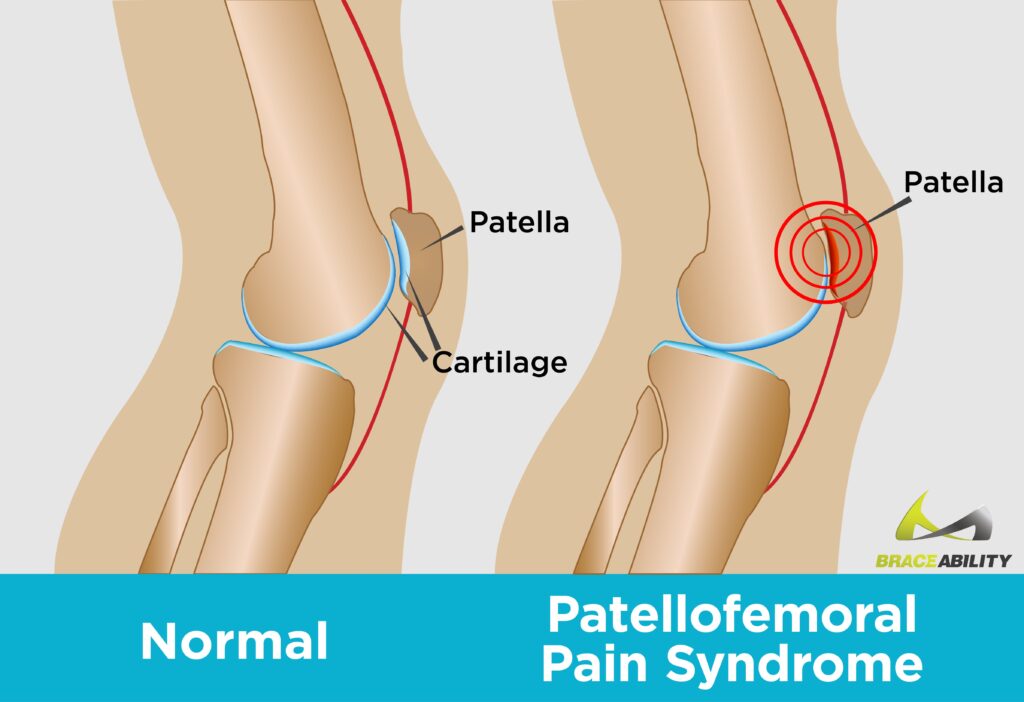
Your knee pain might be from Patellofemoral Pain Syndrome (PFP)
PFP syndrome is one of the most common injuries we see and treat with active individuals, and it affects females more often than males. So, as you ramp up your summer activities, staying content amidst the throbbing pain may become a lot more challenging until the underlying cause of the hurt is addressed. The risk of experiencing Patellofemoral Pain Syndrome (PFP) heightens as individuals age, commonly targeting folks in their fifties. Navigating office stairs more often than not, and the progression of knee injuries, contribute to this predicament.
A host of factors can influence the occurrence of this pain. Namely, weakness in your low back, hip, ankle, spinal cord (particularly nerves in the region), and neck, might affect the amount of stress put on your kneecap during activities, like climbing up and down the stairs, squatting, and running. This pressure could result in swelling in the surrounding tissues, including cartilage, ligaments, and bones, which are symptomatic of osteoarthritis.
Historically, treatment of PFP entailed quadriceps strengthening, taping of the knee cap, knee braces, and foot orthotics. Current research centered on PFP management suggests focusing on strengthening the hip muscles, in particular the gluteus maximus and medius. Additionally, in severe cases, when mobility is drastically curtailed due to pain, surgery could be a potential treatment option. Both the knee, a crucial joint in our body, and the nearby tissue play a paramount role in fostering optimal knee movement, particularly for people contending with arthritis or a knee injury. Optimal knee movement lessens pressure on knee tissues, thereby easing the pain! Especially significant for adults troubled with knee problems and seeking care for the same.
Among the recreational activities beneficial for the health of our joints, we recommend one simple exercise that can be performed at home. Make sure to consult your doctor before starting, to help build muscles and alleviate that knee pain.
Wall Sit Exercise for Knee Cap Pain
Position both your feet about 2 feet out from the wall. Next, ensure your back aligns with the wall so your shoulder blades and buttocks rest against the wall. While sustaining this posture, gradually slide down until there’s about an 80-90 degree bend in your knees. If your knee cap incurs pain, readjust your feet such that your toes point outwards about twenty degrees more. Hold for 20-30 sec and then slide back up. Rest 30 secs. Repeat this 5-10x daily.

(Image Source: https://www.verywellfit.com/the-wall-sit-quad-exercise-3120741)
This is great, but is all frontal knee pain due to PPF?
No, it is not! There are many different structures in your body that can become aggravated and cause not just knee pain, but also headaches and neck pain. A physical therapist can determine if your pain complaints are truly patellofemoral in nature or related to something else. This is very important because treatment strategies will differ depending on the tissues involved.
If you are currently dealing with knee pain, headaches or neck pain and stiffness that is limiting you from your daily activities and are interested in finding out if physical therapy treatment can help, simply give us a ring!
Our therapists at Move Empower Physical Therapy come with specialized training, allowing for a meticulous examination to determine the primary cause of your knee pain. Overlooking the root cause of the pain could diminish the possibility of long-term symptom relief. It is our goal to not only offer immediate relief but also to ensure our patients can relish their favorite sports and events again.
If you are currently grappling with knee pain that hampers your day-to-day activities and are interested to see if our physical therapy treatment could be the solution, make an appointment! We’re here to care for you. Our network of skilled physical therapists is ready to help you combat your joint problems and other areas of discomfort such as headaches and neck pain. Through our adept practice of medicine, our team of health professionals provides various benefits to enhance the quality of life for our patients.
Our aim is to devise a treatment plan to fix your pain points in ways that are most beneficial to you, and to discern whether or not physical therapy is the ideal type of intervention for you. We will get you back to all your favorite activities this summer so you can enjoy the great outdoors with friends and family!
Schedule a FREE discovery session with one of our mobile physical therapists to discuss your condition and ways that Move Empower Physical Therapy, a team of experienced doctors and patient-focused staff, can help you manage your discomfort or injury. And maybe I will see you on my morning job around Lady Bird Lake this season!